
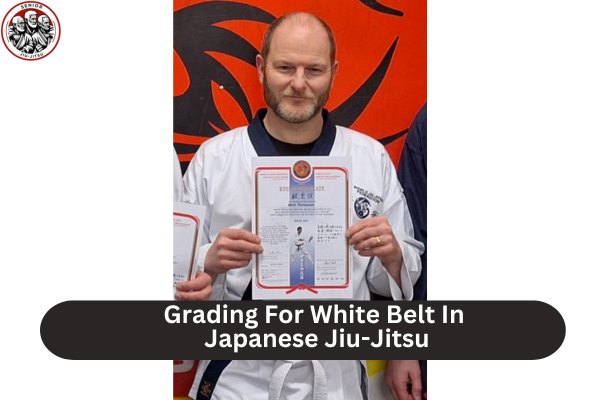
Picture this: You’re standing on the mat, the dojo quiet, save for the focused breathing of your fellow students; it’s grading day. If you’re setting sights on your first white belt in Japanese Jiu-Jitsu, the mix of excitement and anxiety is real. I’m going to help you channel that energy into productive preparation. This isn’t just about rote learning; it’s about embedding the art deeply into your reflexes.
Beforehand, preparation is key. Studying the techniques repeatedly until they’re etched into your muscle memory is crucial. Choose something that resonates with you – be it visualizing movements, drilling with a partner, or shadow practicing. The goal is to transition from thinking about a move to instinctively performing it.
You’re going to find out about the kata – a sequence of movements embodying offense and defense in a fixed pattern. Learning kata for the first time can be daunting, but repetition will make these forms second nature. In my opinion, practicing kata not only hones your skills but also cultivates patience and mindfulness – gifts from traditional martial arts to the modern practitioner.
Don’t worry too much about the butterflies in your stomach; it’s natural to feel nervous before your first grading. Acknowledge these feelings as a sign you care about doing well, and then focus on breathing and visualization to calm your mind. You can always adjust your approach down the road, but for now, solid preparation will give you a foundation of confidence.
Now, as you try to recall whether a specific technique applies to a right or left-hand punch, remember, consistent practice is your greatest ally. Envision each scenario and react accordingly, imprinting the moves in your mind. This preparation phase naturally segues into the next challenge: the mental game of remembering techniques when the pressure is on.
The Mental Challenge of Remembering Techniques
So you’re starting to get the hang of preparation and repetition; what comes next is the tricky part: remembering all those techniques when it matters most. You’re going to find out that during grading, your mind can sometimes draw a blank. Recognizing whether a technique applies to a right-hand punch or a left can truly test your resolve.
I advise devising personalized strategies to embed these moves in your memory. This isn’t just about practicing till you’re tired; it’s about practicing smart. Create mental associations or narratives to help you recall each sequence. This way, you’re not just relying on muscle memory, which can falter under stress.
Keep in mind, patience is key. In my opinion, the art of Jiu-Jitsu is as much about the journey as it is about the destination. Fear of forgetting is normal, but it’s how you bounce back from those hiccups that shows your true growth as a martial artist. Don’t worry too much about perfection on the first try.
When that moment arrives, and you’re poised on the mat, ready to demonstrate your skills, trust in the work you’ve put in. You may be surprised at how your body responds. If you’ve dedicated yourself to the practice, even amidst uncertainty, your training will shine through.
Physical and Mental Stamina on Grading Day
You’re probably eager to know what lies ahead on the day of your white belt grading in Japanese Jiu Jitsu. It’s going to be a test of not just your technical skills, but also your physical and mental resilience. That’s because you’re going to face an extended warm-up followed by an intense series of break falls and punching and kicking padwork.
An extended warm-up does more than just prepare your body for the physical activity ahead; it also sharpens your mental focus. Your instructors know that building stamina is key to performing under pressure. So don’t be surprised if your warm-up feels like a workout in itself. It’s designed that way to simulate the endurance you’ll need during actual combat situations.
After you’re thoroughly warmed up, you’ll transition into break falls. These are essential for your safety and a fundamental part of Jiu Jitsu. Mastering them not only demonstrates your technical knowledge but also your ability to stay composed when thrown. This is where mental fortitude comes into play. You’re training your brain to remain calm even when your instincts might be telling you otherwise.
Next up is the dynamic padwork. Punching and kicking drills against pads are going to test your speed, accuracy, and the effectiveness of the techniques you’ve learned over the past few months. This is where muscle memory can be your best friend. When you’re fatigued, and the sequence of moves starts to blur, you might find that your body knows what to do even if your brain is lagging a bit behind.
Consider this day as not just a grading but as a valuable opportunity to experience the demands of Jiu Jitsu in a more intense setting. This is a huge step in your martial arts journey, and it’s about more than just demonstrating your ability to fight. It’s about showing the strength of your character and the progress you’ve made.
The Triumph of Achieving White Belt: Ceremony and Beyond
That moment when all your hard work pays off is both thrilling and humbling. You’ve made it through the trials of your first grading, and now it’s time for the award ceremony, where you’ll be lining up with your fellow students, ready to be recognized for your dedication.
Being awarded a white belt isn’t just a step in your martial arts journey; it signifies a beginning, a commitment to the discipline of Japanese Jiu Jitsu, and a recognition of your potential. As you take your bow to the sensei, there’s a palpable sense of respect and camaraderie that fills the dojo—a reminder that this experience is as much about growing within a community as it is about individual achievement.
The feeling of elation and relief that comes with the completion of grading is a reward in itself. After months of practice and anticipation, the sense of accomplishment is undeniable. Now, with a white belt firmly tied around your waist, there’s a fresh surge of motivation to continue improving, learning, and embracing the challenges ahead.
And let’s not forget about the picture time! It’s more than just a photo; it’s a memento of your perseverance, the friends you’ve made along the way, and the start of a new chapter in your martial arts story. You’ll look back on this photo, perhaps years down the line, and remember this pivotal moment—the end of one step and the exciting beginning of what’s to come.