
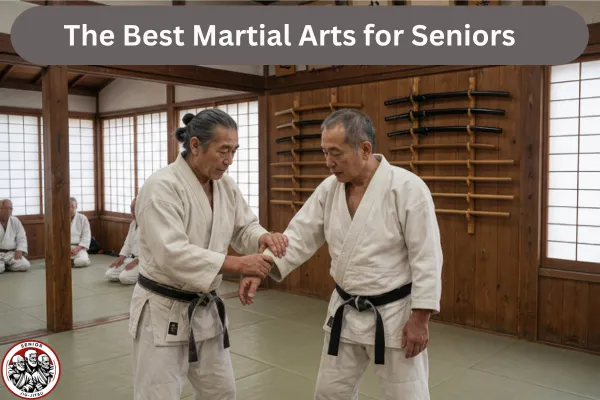
Japanese jiu jitsu is one of the best martial arts for seniors because it teaches you to fall safely, uses leverage instead of strength, and lets you set the pace of practice. It builds fitness and practical self defense together, and you can start at any age with a doctor’s approval and a good instructor.
What is Japanese jiu jitsu, and why is it one of the best martial arts for seniors?
Japanese jiu jitsu is a traditional self defense system built on throws, joint locks, escapes, holds and a small set of basic strikes, all designed to work against a larger or stronger person. If you want the full background, the post on what Japanese jiu jitsu is and whether it suits seniors covers it in detail.
The reason it suits older beginners comes down to how the art works. It relies on balance, timing and angles, which you can keep improving at any age. A smaller person who understands where a partner’s balance is weak can do more than a strong person who does not.
Here is how it compares with other arts people over 50 often consider. These are general descriptions, and every school teaches differently.
|
Martial art |
Main focus |
What to know as an older beginner |
|---|---|---|
|
Japanese jiu jitsu |
Throws, joint locks, escapes, basic strikes |
Broad self defense, adjustable pace, falling taught early |
|
Judo |
Throws and ground holds |
Strong falling skills, though some clubs lean toward competition |
|
Aikido |
Joint locks and redirecting force |
Gentle pace, but often less practice against resisting partners |
|
Brazilian jiu jitsu |
Ground grappling and submissions |
Excellent ground skills, intensity of sparring varies by gym |
|
Tai chi |
Slow movement and balance |
Very low impact, but usually little self defense training |
|
Karate or taekwondo |
Striking and kicking |
Good fitness, but high kicks and fast pivots can stress hips and knees |
Japanese jiu jitsu earns the top spot for seniors for four reasons:
- Falling is a core skill. You learn how to land before you are thrown, and you practice it often.
- Technique beats strength. Throws and joint locks work through leverage, so your age matters less than your timing.
- You control the intensity. Most of the training is cooperative drilling, and you can slow it down or sit out a round.
- It covers the full range of self defense. You learn to deal with grabs, pushes, chokes and falls to the ground, not only one kind of attack.
Can seniors learn Japanese jiu jitsu, and what age should you start?
Yes, seniors can learn Japanese jiu jitsu, and the best age to start is the age you are now, provided your doctor agrees. The art has no age cutoff. What matters is your current health and whether the school adapts its training to you.
Many people begin in their fifties, sixties and seventies. They train alongside younger students, but they train differently: shorter sessions, more repetition of basic movements, and fewer high-impact throws.
Before you sign up, talk to your doctor if you have any of the following:
- Heart conditions or high blood pressure
- Osteoporosis or low bone density
- Joint replacements
- Recent surgery or a past neck or back injury
- Balance problems or dizziness
None of these automatically rules you out. They do change which techniques you should do and how you should do them, and your instructor needs to know about them before the first class.
You do not need to be fit before you start. Training itself builds strength, mobility and balance, and a good school lets you build up gradually. Starting out of shape is normal and instructors expect it.
Is jiu jitsu safe for seniors?
Jiu jitsu is reasonably safe for seniors when the school is well run and you train with sensible limits, but it carries real risk like any physical activity with contact. Most injuries come from rushing, from ego, and from partners who go too hard.
You control most of the risk factors. These habits matter most:
- Tap early. If a joint lock feels uncomfortable, tap your partner or the mat right away. A tap ends the technique immediately in any decent school.
- Tell your partner about injuries. A sore shoulder or a bad knee is something to say out loud before drilling starts.
- Stop at sharp pain. Muscle fatigue is normal. Sharp or joint pain is a signal to stop and get it checked.
- Warm up every time. Cold joints and stiff muscles are easier to strain. The post on effective warm-up stretches for Japanese jiu jitsu gives you a routine to use before class.
- Take rest days. Recovery takes longer after 50, so training every day usually backfires.
If you do get hurt, it helps to know how to recover well and when to see a professional. The guide on injury prevention and recovery strategies for senior Japanese jiu jitsu walks through that.
The school matters as much as your own habits. A good instructor teaches falling first, supervises partner work closely, and does not pressure anyone to go harder than they want.
How do you fall safely in jiu jitsu?
You fall safely by tucking your chin, rounding your back, and slapping the mat with your arms as you land so the force spreads across a wide area instead of hitting one joint or your head. This skill is called ukemi, and most Japanese jiu jitsu classes teach it in the first lessons.
Here is the basic back fall, in order:
- Start sitting on the mat with your knees bent and your arms crossed in front of you.
- Tuck your chin to your chest and keep it there the whole time so your head never touches the floor.
- Roll back through a rounded spine, from the lower back up to the shoulders.
- As your back meets the mat, slap down with both arms at roughly a 45 degree angle from your body, palms down.
- Lift your feet slightly so your legs do not slam into the floor.
Once that feels easy, repeat it from a squat, then from standing. This gradual progression is how older students build confidence without jarring their bodies. The side fall and the forward roll follow the same idea, and each one takes practice over many classes.
One rule applies to every fall: never reach out with a stiff arm to catch yourself. A locked elbow or wrist takes the full force of your weight and is a common way to get hurt. Slapping the mat with a relaxed arm spreads the impact instead.
Falling practice has value outside the dojo too. Learning to tuck your chin and round your body gives you a response to try if you slip on ice or trip on a curb, and the more you practice, the more automatic it becomes.
What are the core Japanese jiu jitsu techniques, including joint locks?
The core techniques are stances and movement, falling, escapes from grabs, throws and takedowns, joint locks, and a few basic strikes. A beginner class usually introduces them one at a time over many weeks.
- Stances and movement. You learn to stand balanced and move without crossing your feet, which protects your knees and hips.
- Falling. As covered above, this comes first and returns in every class.
- Escapes. You practice breaking free from wrist grabs, lapel grabs and holds from behind.
- Throws and takedowns. These unbalance a partner and put them on the ground. Seniors can choose low-impact versions, and the post on takedowns that won’t wreck your knees explains how to pick them.
- Joint locks. These control a partner by pressuring a joint, such as the wrist, elbow or shoulder, in the direction it already bends or just past it.
- Basic strikes. Palm heels, elbows and similar strikes are usually taught as a supplement to the grappling.
Joint locks are what many people picture first, and they are very well suited to seniors. A lock works through leverage and angle, so it takes very little force when the technique is correct. Drilled slowly with a cooperative partner, locks are a precise way to train without hard impact. A good example is the americana, a shoulder lock that is covered step by step in the guide to mastering the americana arm lock.
Practice locks slowly and apply pressure gradually. Your partner taps when they feel the lock take effect, and you release the instant they do. That habit protects both of you and is the foundation of safe joint lock training.
Is Japanese jiu jitsu hard to learn, and how do seniors start?
Japanese jiu jitsu takes time to learn, but the first steps are simple, and a good school teaches you in small pieces. You will feel clumsy for a while. That is normal for any new physical skill, and it does not mean you are too old.
Follow this sequence to get started:
- Get your doctor’s approval. Mention the specific movements involved: falling, being gripped, and having joints controlled.
- Search for local classes. Try searches such as “Japanese jiu jitsu near me”, “senior citizen martial arts classes” and “self defense training near me”. Spelling varies, so also try “jujutsu” and “ju-jitsu”. Community centers, recreation departments and independent martial arts schools are all worth checking.
- Visit and watch a class. Look at how the instructor treats beginners, whether students of different ages train together, and whether partners work at a controlled pace.
- Ask questions before you commit. Ask whether falling is taught first, whether you can adjust your intensity, and whether the instructor has taught students with injuries or health conditions.
- Take a trial class. Wear loose, comfortable clothing and ask the school what to bring. Many schools lend a uniform for the first visit.
- Begin with one or two classes a week. This gives your body time to adapt and recover between sessions.
Watch for warning signs when you visit. Be cautious if a school pushes hard sparring on new students, ignores your health information, or makes you feel foolish for asking questions. A school that suits you will welcome all of that.
Most beginners make similar errors in their first months, from training too hard to skipping the basics. The post on common mistakes to avoid in white belt training for seniors lists them so you can avoid them.
What do seniors ask most about Japanese jiu jitsu?
These are the five questions beginners over 50 ask most often, with direct answers.
What is the best martial art for a 60-year-old beginner?
Japanese jiu jitsu is a strong choice because it combines safe falling, leverage-based techniques and adjustable intensity. Judo and aikido are also worth considering, and tai chi suits people who want very gentle movement. Visit a few schools and choose the one whose instructor and classmates fit you best.
Is jiu jitsu good for self defense for seniors?
Yes, because it teaches you to escape grabs, control a person’s balance, and use joint locks that work without much strength. It also teaches you to stay on your feet or recover if you go down. Realistic self defense also depends on awareness and avoiding trouble, and regular practice is what makes the techniques reliable under stress.
How often should a senior train?
One or two classes a week is a sensible start for most older beginners. This leaves time for recovery, which takes longer as you age. You can add sessions gradually if you feel well and are not carrying lingering soreness.
Do I need to be flexible or fit before I start?
No. Flexibility and fitness are outcomes of training, not requirements for it. A school that works with seniors will let you build up slowly, and a warm-up routine before each class helps you loosen up.
Can I train with arthritis or a joint replacement?
Many people do, but ask your doctor first and tell your instructor before class. Some techniques, particularly those that load or twist a specific joint, may need to be modified or skipped. An experienced instructor can offer alternatives and help you stay on the mat safely.
Is Japanese jiu jitsu the right martial art for you?
Japanese jiu jitsu is the right martial art for you if you want real self defense, a workout you can scale to your own level, and a skill that keeps improving with age. It asks for patience more than athletic ability.
The art teaches you how to fall, how to use leverage, and how to control a situation without force, and you can practice all of it at your own pace. The main steps are to get medical clearance, find a school that welcomes older students, and take a trial class to see how it feels.
If you are curious, start with the search. Look up Japanese jiu jitsu or senior martial arts classes in your area, visit one school this week, and ask the questions listed above. One class will tell you far more than reading ever can.